
Review · 2026
Seedance 2.0 Mini Review: 30% Cheaper, 2× Faster — Is It Worth It?
ByteDance's Volcano Engine has rolled out the newest member of the Seedance family: Seedance 2.0 Mini. Standard Seedance 2.0 has topped AI video leaderboards for months on prompt adherence and cinematic output — but its high per-clip cost and long queues are the common complaints. This hands-on review breaks Mini down with verified facts, real pricing, and four test clips.
Key Takeaways
- Launched mid-June 2026, with public API access expected around June 22, 2026.
- Runs at roughly half the price of standard Seedance 2.0 and about 2× faster than Seedance 2.0 Fast.
- Output is capped at 480P and 720P, in 4–15 second clips at 24fps.
- Keeps the full multimodal reference system: up to 12 inputs (6 images, 3 audio, 3 videos).
- Real human faces are not supported — a platform-wide policy across the Seedance family.
What Is Seedance 2.0 Mini?
Seedance 2.0 Mini is the cheapest and fastest tier in ByteDance's Seedance 2.0 video model family. The family now has three siblings:
Unlike many “lite” releases, Mini doesn't strip out the core architecture. It keeps Seedance 2.0's multimodal reference system, camera-language understanding, and multi-shot narrative capability — what's been trimmed is the compute envelope per generation. Mini is not a cheap toy; it's a production tool sized for daily creative workflows.
Performance Review
Prompt understanding holds up
The first concern most creators have is whether shrinking the model hurts prompt comprehension. The short answer is no. Mini inherits the most important capability of the Seedance 2.0 series — understanding complex scene relationships and cinematic camera intent, not just surface-level keyword matching.
Prompts like “slow dolly-in,” “cinematic close-up,” “tracking shot,” and “soft side lighting”still translate into real camera movement and lighting choices, rather than a static image with synthetic motion glued on top. It isn't fast for the sake of being fast — it preserves Seedance 2.0's prompt-understanding framework while lowering the cost of entry.
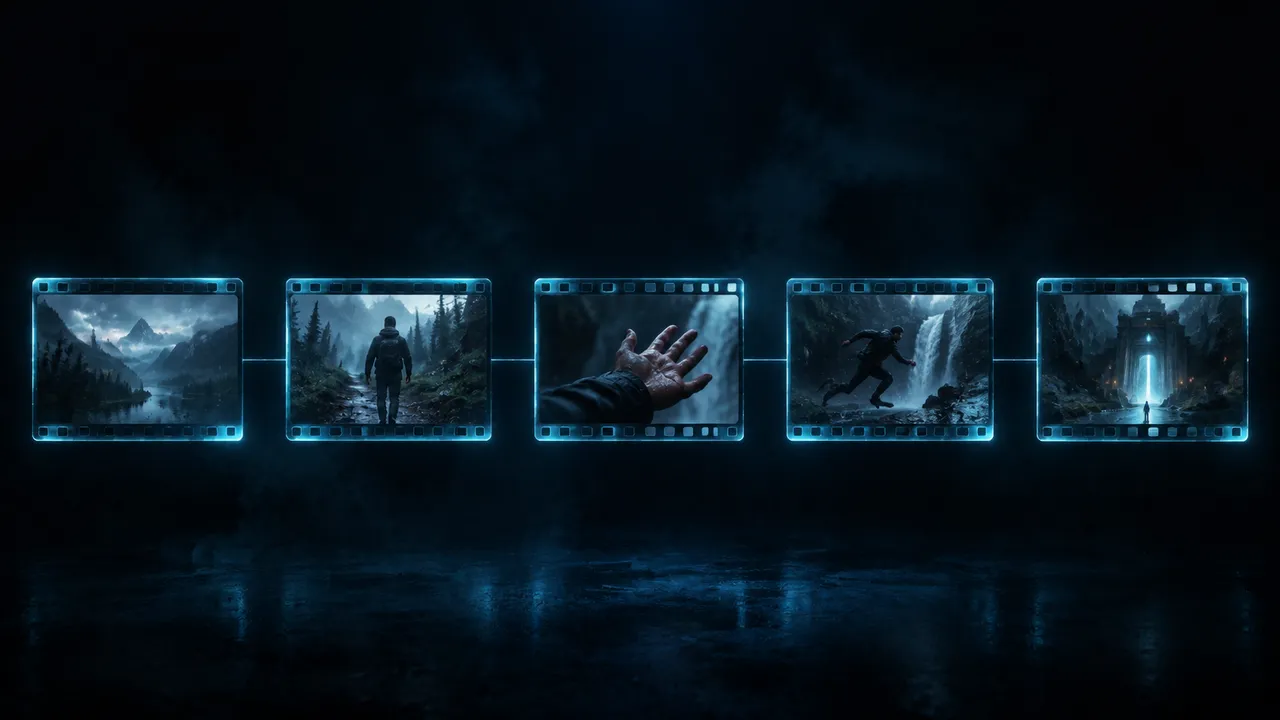
Multi-shot storytelling
A persistent weakness in earlier AI video models was the gap between a great single shot and a coherent multi-shot sequence. Models could produce one beautiful clip, but the moment a story needed multiple cuts, characters drifted and shots stopped feeling like the same world. Mini interprets a prompt as a complete visual narrative: how the opening establishes the scene, how action progresses, whether transitions land, and whether the subject stays consistent across cuts.
For short-form creators, e-commerce sellers, and ad testers, this matters more than raw resolution. They rarely need a 30-second cinematic short — they need 5–12 second clips with a clear narrative arc, intentional camera language, and coherent motion logic.
Speed and cost — the real differentiator
- Generation speed is roughly 2× faster than Seedance 2.0 Fast.
- Per-clip cost is about 50% lower than standard Seedance 2.0.
- ByteDance's internal tests claim Mini even edges out Fast on motion stability (independent reviews are mixed, but the direction holds).
How Much Can It Actually Save You?
At base rates, Mini costs about 30% less than Seedance 2.0 in regular usage — if Seedance 2.0 = 100% of cost, Mini ≈ 70%. That becomes serious leverage for anyone iterating frequently.
There's also a limited-time launch promotion: between June 15 and July 22, 2026, users who subscribe to Pro before June 21 get an additional 33% discount on credit consumption at 720P, and buying a Pro plan through the CapCut app stacks up to 60% off. Combined, Dreamina Seedance 2.0 Mini can cost up to ~55% less than Dreamina Seedance 2.0. For our own per-second rates and credit packs, see Seedance 2.0 Mini pricing.
Generate more, spend less, keep the quality usable.
Hands-On Tests
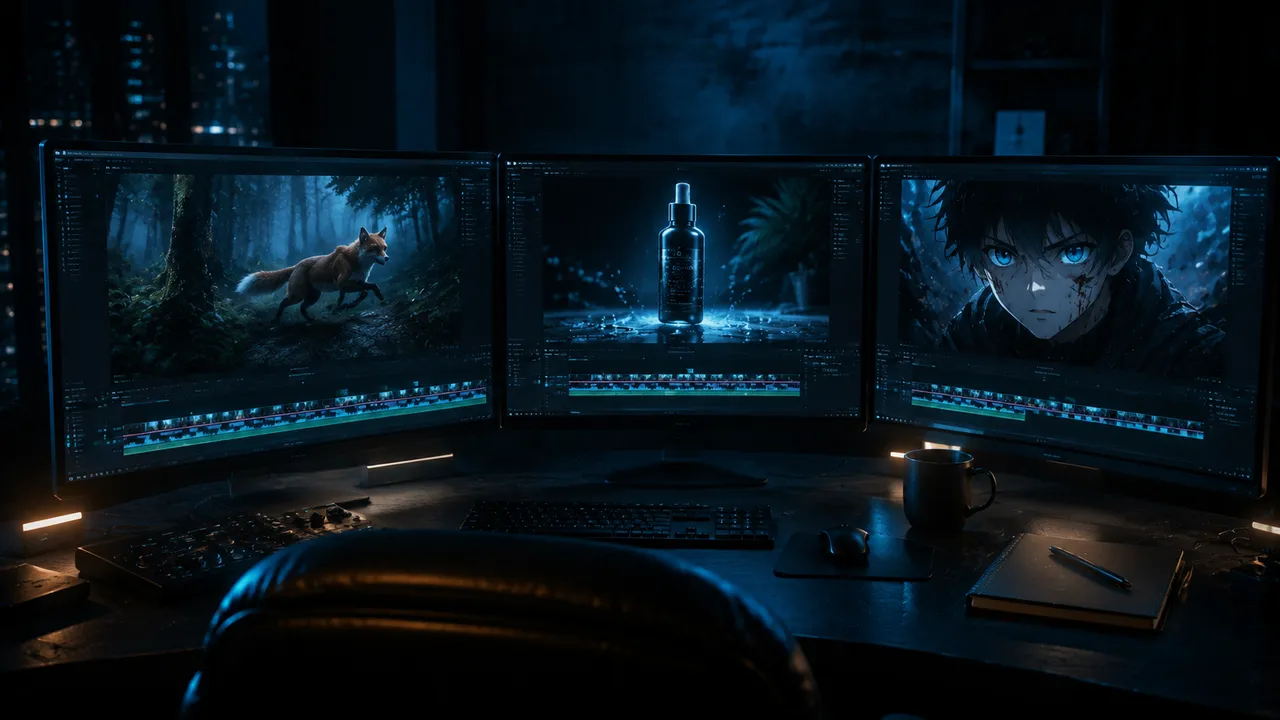
Specs aside, the only test that matters is output quality. Based on demo clips and hands-on results, Mini's first impression is stable, clean, and usable. It is clearly not engineered to chase the absolute ceiling of cinematic fidelity — it's tuned for daily output: short ads, product showcases, social-first clips, and storyboard tests. Here are four real generations, each with the exact prompt and settings used.
Visual quality
Mini keeps the Seedance family's signature cinematic look — clean color, layered lighting, decent subject-background separation. Character close-ups, urban street shots, and product showcases consistently produce something usable on the first try.
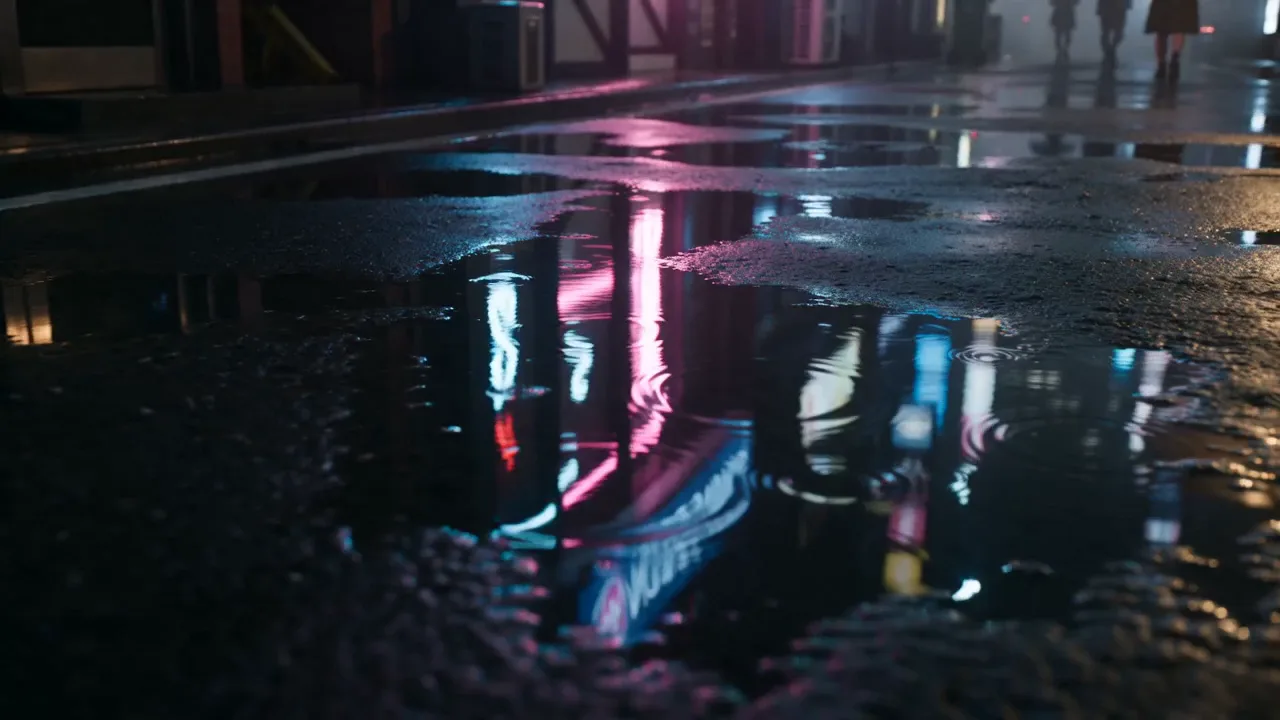
Objective. Evaluate atmosphere, lighting and shadows, and spatial depth in a complex scene.
A narrow rain-soaked alley in a cyberpunk Tokyo-style district at night. Neon shop signs in pink and blue reflect on wet asphalt puddles; steam rises from a small ramen stand on the right. The camera tracks slowly sideways, parallel to the street, revealing layered signage and a few silhouetted pedestrians under umbrellas in the distance. Photorealistic cinematic style, anamorphic lens flare, moody atmosphere, high-contrast lighting.
Motion
Simple actions are handled reliably — walking, turning, hand-raising, push-ins, product rotation. Movement feels natural with few glitches. Complex motion is the soft spot: multi-person interactions, fast action, intricate choreography, and detailed hand work often need multiple takes before landing.
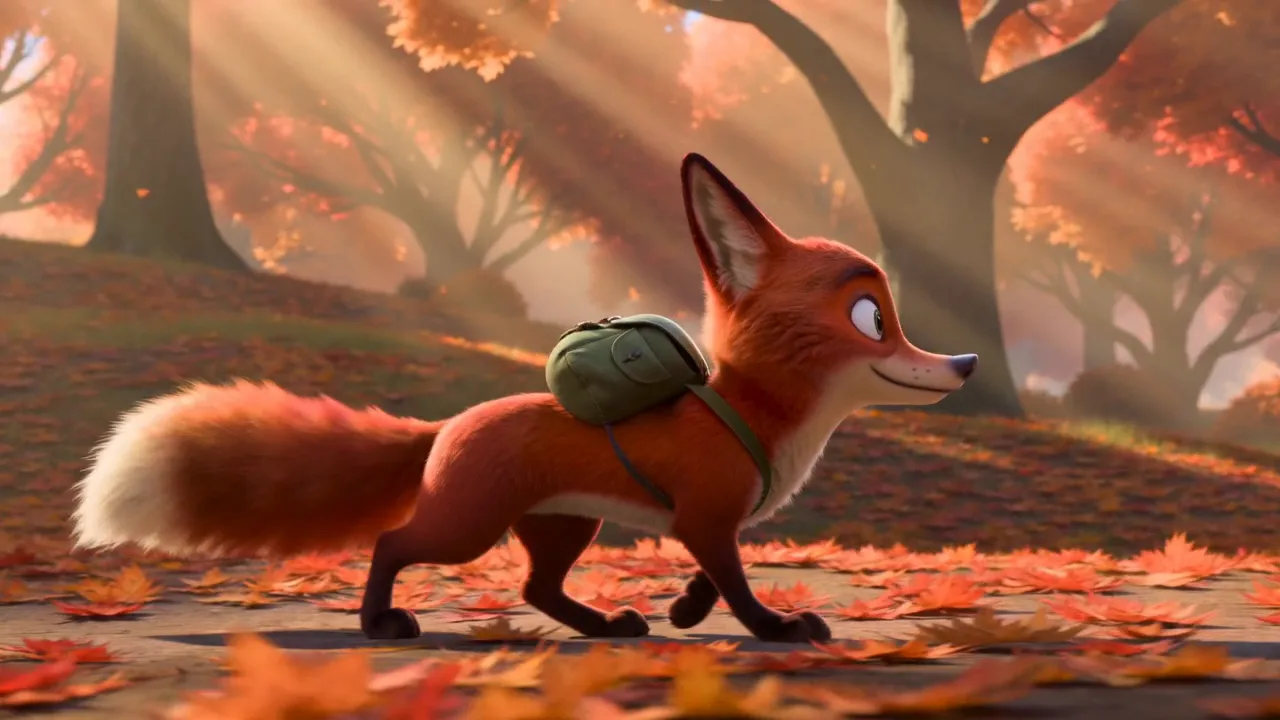
Objective. Test basic character walking animation and limb-movement cycles.
A stylized 3D cartoon fox wearing a small green backpack walks briskly along a forest path lined with autumn leaves, occasionally glancing up at fluttering birds. Side-on tracking shot moving with the fox at a steady pace. Warm afternoon sunlight filtering through the canopy, vibrant orange and red leaves on the ground, dust particles drifting in the light beams. Pixar-inspired 3D animation style, soft shadows, cinematic color grading.
Prompt fidelity
One of Mini's stronger areas. Cinematic camera language ("slow dolly-in," "tracking shot," "low-angle wide") translates to visible camera intent. Output feels less like an animated still and more like a directed shot.
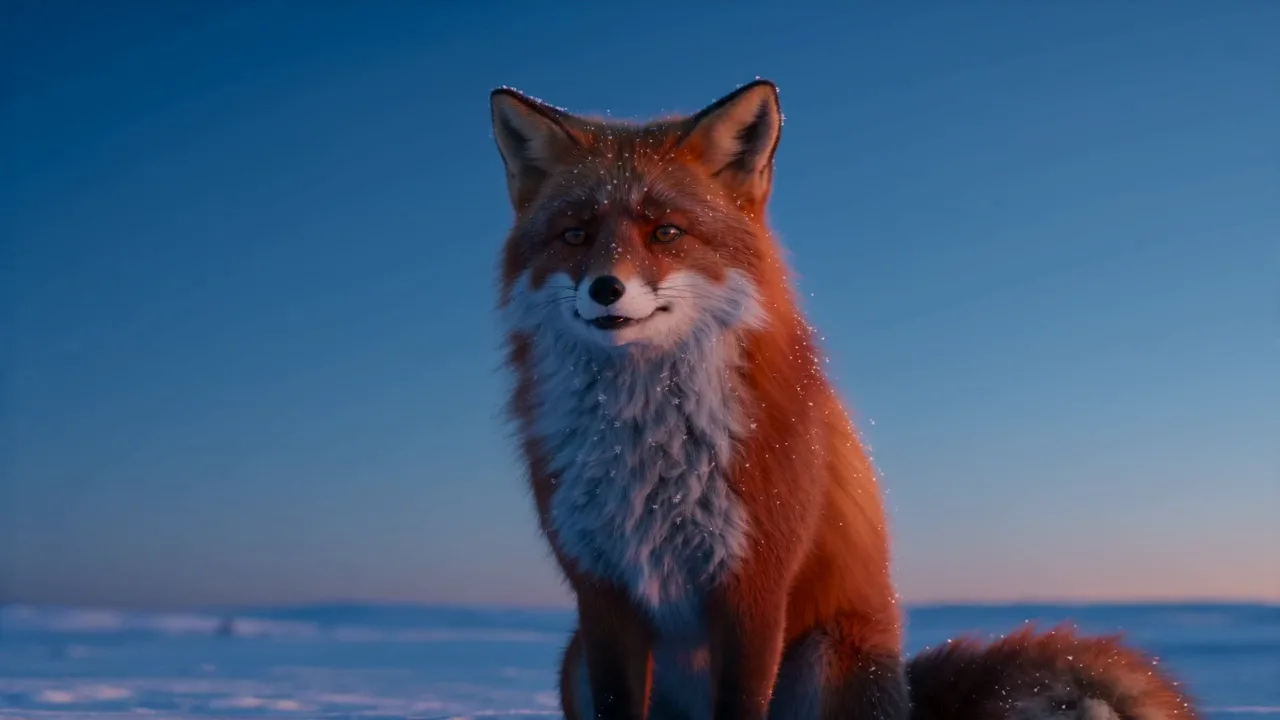
Objective. Can Mini transition from a medium shot to an extreme close-up on its own, and how is the depth-of-field control?
A stylized 3D rendered red fox sits motionless in a snowy clearing at dawn, its breath visible as small puffs of mist, snowflakes settling gently on its fur. The camera begins as a medium shot and slowly pushes in to an extreme close-up of one watchful amber eye, in which a tiny reflection of the rising sun is visible. Photorealistic CGI style, cold blue ambient light with warm orange sunrise highlights, ultra-shallow depth of field.
Character consistency
Within a single subject, short clip, Mini does well — facial structure, hair, clothing, and overall vibe stay stable. Push it harder (many cuts, large angle changes, multi-person framing) and small details start to drift. Best deployed in short, focused clips; not the right tool for complex long-form continuity.
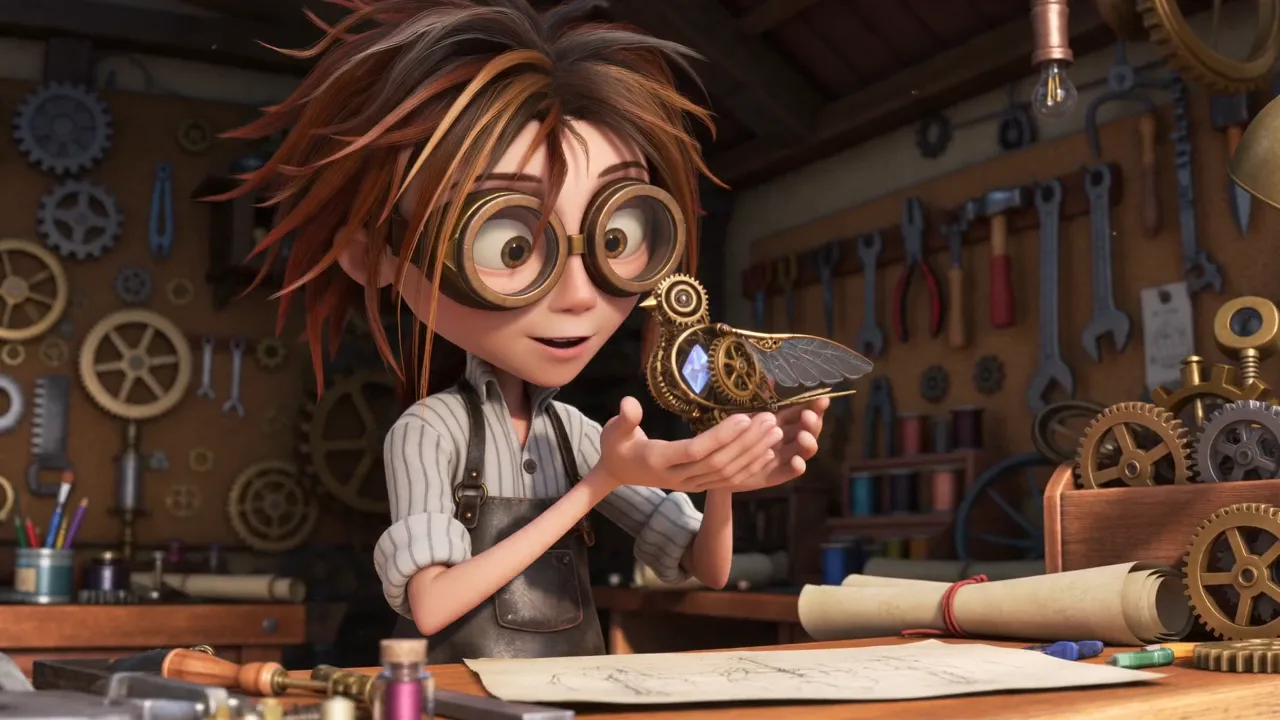
Objective. Push Mini to its limits and look for drift across a three-shot sequence (hairstyle, goggles, apron, stripes, and any face-swapping).
A stylized 3D cartoon young inventor with messy brown hair, round brass goggles, and a leather apron over a striped shirt works in her cluttered workshop. Shot 1: medium close-up at her workbench; she lifts a small mechanical bird and inspects it. Shot 2: wide shot from across the room as she walks to a window and opens it. Shot 3: close-up from outside the window as she releases the bird, watching it fly away with a small smile. Warm afternoon light, Pixar-style 3D animation, consistent character design across all three shots.
In one sentence:Mini doesn't compete for top-end fidelity, but its stability, camera sense, and everyday usability outperform what the word “Mini” suggests. The point isn't that any single render is jaw-dropping — it's that creators can produce usable video far more often, with less friction per attempt.
Mini vs Seedance 2.0 vs Fast
Need a quality ceiling?
Film, brand, or a final cut → standard Seedance 2.0. It still wins on top-end fidelity and complex productions.
Need low-cost, high-volume output?
Social, ads, e-commerce → Seedance 2.0 Mini. Cheaper and faster, at comparable everyday quality.
Where does Fast sit now? In an awkward middle. Mini is faster, cheaper, and at comparable or better quality — Fast's role is increasingly being absorbed. If you want the earlier generation instead, the Seedance 1.5 page covers its silent and with-audio rates.
Who Should Use Seedance 2.0 Mini?
Mini was deliberately not designed to be for everyone.
✅ Excellent fit for
- Short-form creators publishing daily to TikTok, Reels, and YouTube Shorts
- E-commerce sellers producing product videos, demo clips, and A/B test assets at volume
- Performance marketers burning through creative variations to find winners
- Social-media teams running content factories with daily output targets
- AI video beginners — low cost makes the learning curve much friendlier
- Anime and stylized creators — Mini is particularly stable on illustrated content
⚠️ Stick with Seedance 2.0 if you need
- Premium cinematic deliverables — film, broadcast, top-end brand campaigns
- Maximum visual detail on hero shots
- Real human face generation — not supported anywhere in the Seedance family
- Long-form narrative — the single-clip ceiling is 15 seconds across the family
One-line summary: if your workflow is high-volume, stylized, and budget-sensitive, Mini is probably your default model.
How to Use Seedance 2.0 Mini
The basic workflow takes five steps. For a deeper walkthrough with prompt formulas and troubleshooting, see the full how to use Seedance 2.0 Mini guide.
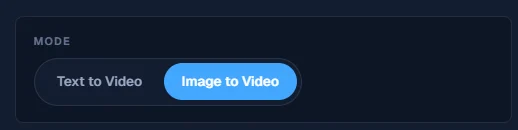
Step 1 — Pick the model
In the model selector, choose Text to Video or Image to Video.
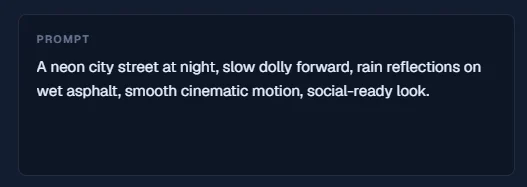
Step 2 — Write a strong prompt
Cover five elements: subject, action, scene, camera movement, and style. Example: a skincare bottle rotating on a clean white table, soft studio lighting, close-up shot, commercial ad style.
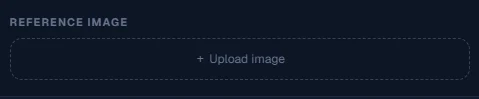
Step 3 — Add references (optional)
Attach up to 12 inputs (6 images, 3 audio, 3 videos) and bind them in the prompt with @Image1, @Video1, and so on.
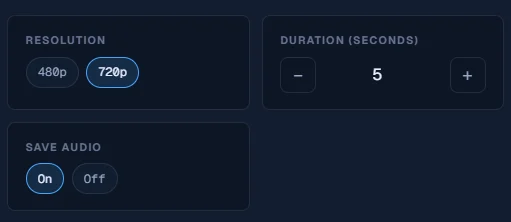
Step 4 — Pick aspect ratio and duration
9:16 for TikTok / Reels / Shorts, 16:9 for YouTube and most web, 1:1 for the Instagram feed. Set resolution and clip length.
Step 5 — Generate, review, iterate
Check three things first — is the subject stable, does the motion read as natural, does the camera match your description. Generate several quick variants, pick the strongest, then refine.

Don't expect a one-shot win. The most effective Mini workflow is to generate several quick variants, pick the strongest, and only then refine. The cost structure is built for exactly this kind of iteration.
Commercial Use and Copyright
Seedance 2.0 Mini lowers the technical barrier to AI video, but it does not lower the legal barrier to commercial use. The real boundary is copyright and licensing. If your prompts or references include celebrity likenesses, film characters, anime IP, brand logos, copyrighted music, or a style that clearly imitates an existing work, the output can carry copyright, right-of-publicity, trademark, or moderation risks — magnified when used in ads, brand campaigns, or client work.
In plain terms: AI generation doesn't automatically come with commercial rights. Three rules to follow:
- Use materials you own or have explicit rights to — your own product photography, licensed brand assets, original character designs, self-recorded audio.
- Avoid recognizable third-party IP — don't directly generate a specific celebrity, movie character, anime figure, well-known brand packaging, or protected artistic style.
- Check platform and project policies before publishing — ad networks, social platforms, and clients all have different rules for AI-generated content, likeness use, and music rights.
The safest question is never “can the AI generate this?” It's “do I have the right to use this?”
Seedance 2.0 Mini FAQ
- What is Seedance 2.0 Mini?
- Seedance 2.0 Mini is the lightweight, low-cost tier in ByteDance's Seedance 2.0 video model family. Its core value isn't pushing image quality higher — it's helping creators produce more usable videos with less wait time and lower credit cost.
- Is Seedance 2.0 Mini better than Seedance 2.0?
- Not across the board. Standard Seedance 2.0 still wins on cinematic ceiling, top-end fidelity, and complex final productions. Mini wins on day-to-day workflow: short-form, ad drafts, product video, and fast iteration. The clean framing: 2.0 is for the quality ceiling, Mini is for speed, cost, and iteration efficiency.
- Is Mini actually better than Seedance 2.0 Fast?
- For most everyday use, yes. Mini is about 2× faster than Fast, costs less per clip, and ByteDance's tests claim slightly better motion stability. Independent reviewers are mixed on the motion claim, but the cost-and-speed advantage is uncontested. For most short-form workloads, Mini has effectively absorbed Fast's role.
- How much cheaper is Seedance 2.0 Mini?
- About 30% cheaper than standard Seedance 2.0 at regular rates, and up to ~55% cheaper when stacked with the limited-time CapCut Pro promotion (June 15 – July 22, 2026).
- Does Seedance 2.0 Mini support 1080P?
- Officially no — output is 480P and 720P at 24fps, in 4–15 second clips. Some Dreamina deployments expose higher-resolution outputs through post-processing, but the model itself renders to 720P max. For native 1080P/2K you need standard Seedance 2.0.
- Does Seedance 2.0 Mini support real human faces?
- No. No tier in the Seedance family supports real human faces, celebrity likenesses, or selfie inputs. Use illustration, anime, or AI-generated synthetic characters as references.
- When does the Seedance 2.0 Mini API open?
- The official API is expected to open around June 22, 2026, via BytePlus (international) and Volcengine (China). Until then, Mini is accessible inside Dreamina, Jimeng, and the CapCut app.
- What video lengths work best on Mini?
- The model supports 4–15 seconds, but empirically 5–10 seconds is the most stable range and maps cleanly to TikTok / Reels / Shorts formats.
- Can Mini maintain character consistency across shots?
- Within a short clip with a single subject, yes. Once you push into multiple cuts, large angle shifts, or multi-character framing, details can drift. For strict multi-shot continuity, use standard Seedance 2.0.
- Can I use Mini-generated video commercially?
- Yes — but you remain responsible for clearing your inputs. The model is licensed for commercial output, but copyright, likeness rights, and music licensing on your source material are your responsibility.
The Verdict — Is Seedance 2.0 Mini Worth It?

For most everyday AI video creators in 2026, Seedance 2.0 Mini is the most valuable lightweight model on the market right now. It doesn't try to beat standard Seedance 2.0 on visual ceiling. What it actually does is pull AI video out of the “expensive experiment” bucket and into the “daily production tool” bucket. When each generation costs half and waits are half as long, the number of variations you try scales exponentially — the real precondition for AI video going mainstream.
The optimal workflow is using both in sequence: iterate cheaply on Mini, render the final keepers on standard 2.0. That's the actual point of Mini's release — not replacement, but completing the pipeline.
Try it yourself
Generate your first Seedance 2.0 Mini clip
Turn a concept into a publishable short in minutes, right in the browser, with 20 free credits.